Having covered in posts 1 and 2 why radiometric dating is considered reliable, how the geologic column appears, and how the cross correlation of radiometric dates, fossil composition, and layer depth in the column all converge on expectations it’s time to take a closer look at some of the transitional sequences in the fossil record. The Transitional Vertbrate Fossils FAQ at talk.origins does it very well so I’ll leave the listing to them:
Instead, here I’ll focus on just a few example transitions with some detailed discussion.
Reptiles to Mammals
The list provided at the link above for this particular transition is extensive, covering a sequence of 30 fossil species… the early quite reptilian, then reptilian but with some somewhat mammalian features… then reptilian with some more than somewhat mammalian features… then a solid mix of reptilian and mammalian features… then decidedly mammalian with reptilian features… then mammalian with some somewhat reptilian features, and finally mammalian with few if any reptilian features.
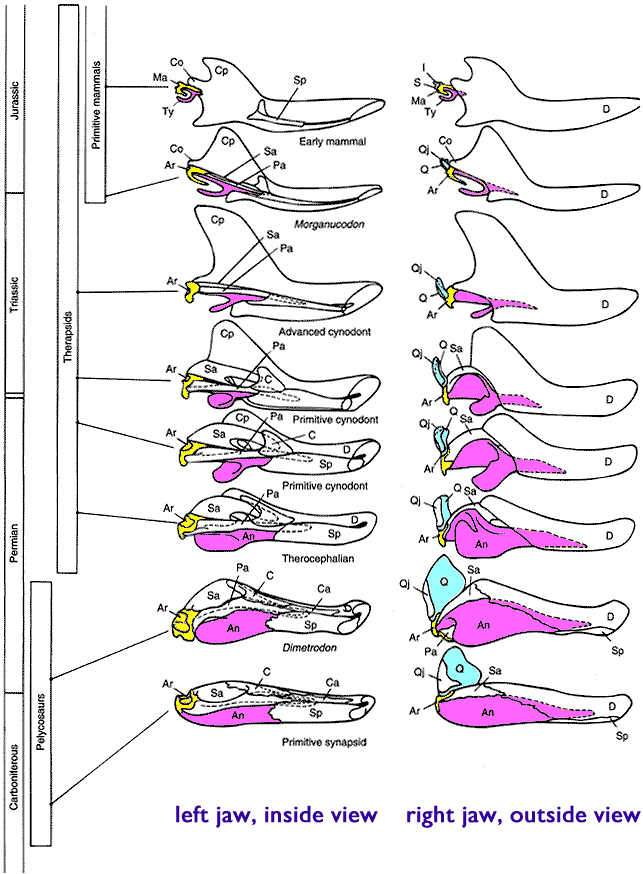
One particularly well illustrated example they proivide of what was occurring during this process is the development of the mammalian ear from reptile jaw structures… illustration here:
Starting at the far left side of the image we have the timescale of which periods each of the fossils are found from. As we move forward from the Carboniferous to the Jurassic we see the clear gradual change in the shape of the skeletal structure in each consecutive example. The left hand column of images if the view of the jaw from the inside. The right hand column is the view of the same jaw from the outside. The bone highlighted in yellow is the articular reptilian jaw bone, which eventually becomes the mammalian malleus (the “hammer” in the ear). The bone hignlighted in pink is the reptilian angular jaw bone, which eventually becomes the tympanic annulus in mammals. The bone highlighted in light blue is the reptilian quadrate jaw bone, which eventually becomes the mammalian incus (the “anvil” in the ear).
This particular sequence is also an excellent illustration of the gaping flaw in claims of “Irreducible Complexity”. Such arguments simply don’t understand how evolution progresses. Someone who held to the IC line of argument would look at something like the ear and say “Well, what good is an ear without the hammer? Huh? What good is half an ear? All those interconnecting bones would have to evolve all at the same time! That’s just silly... so the ear is Irreducibly Complex”. (And yes, people really do make that argument)
On the surface of it, if you don’t really understand how evolution operates, that article has a certain compelling appeal to common sense. People who haven’t been exposed to the full weight of the evidence for evolution and how it operates think that is a perfectly reasonable statement. It is however dead wrong, as we can clearly see. They look at a modern human ear, which is the product of millions of years of refinement to optimize it for operating with the structures available to it… and then just because after all that fine tuning if you suddenly come along and yank a gear out of the mechanism it stops working it couldn’t have developed gradually? Nonsense. Nobody with any knowledge of evolution would ever say that at some point in the past there was some animal with an ear that was completely missing a malleus… but otherwise was an ear exactly like a modern human with all the same bones in the same shape for no apparent reason whatsoever… just waiting around for a fluke mutation to pop that bone right in there out of nowhere. That is an absurd representation of evolutionary progression and does not remotely resemble what is encompassed by evolutionary theory. It is nothing but a flimsy strawman.
On to the next example: